What's going on
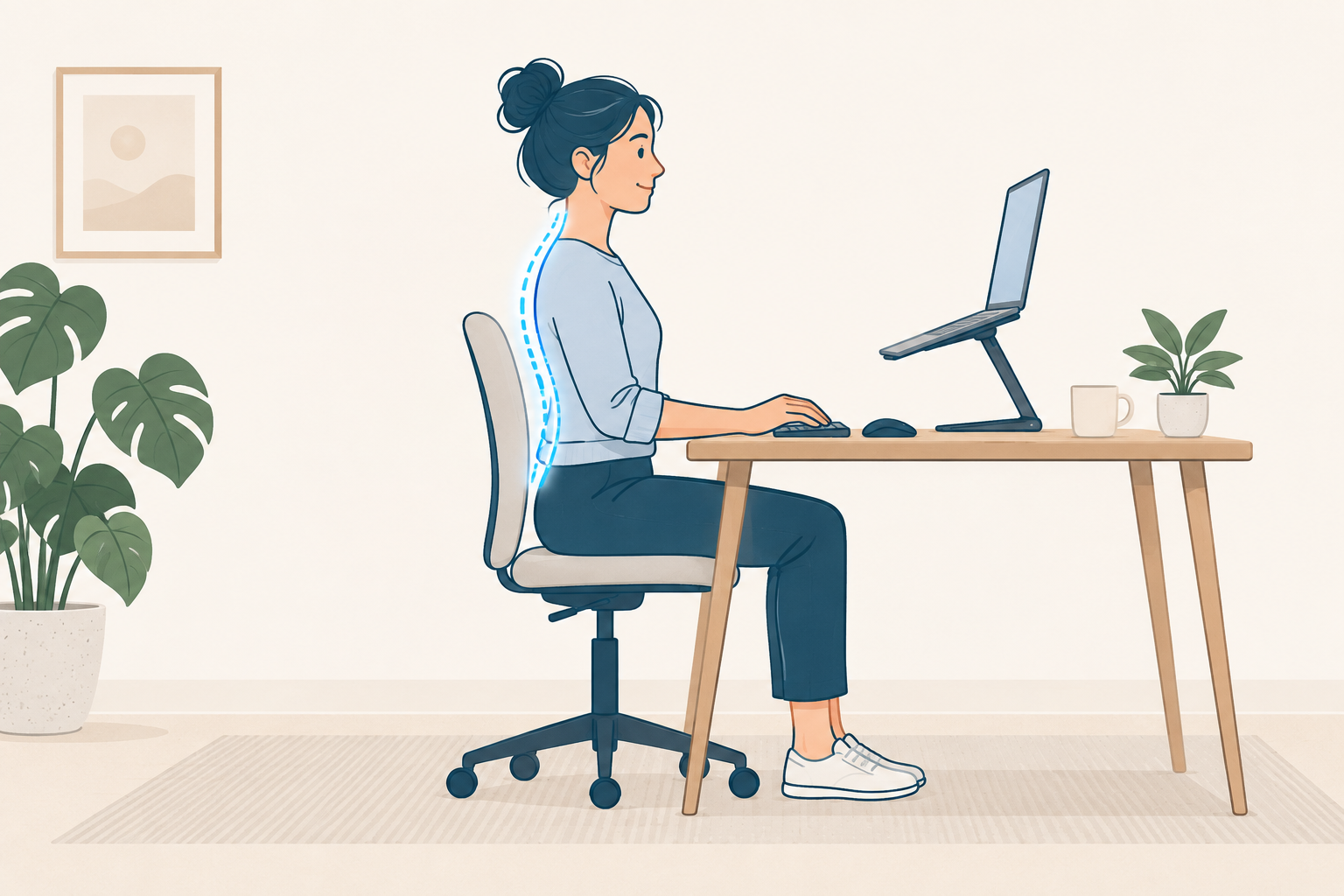
PhysioOnClick reviews workplace-related pain — including home workstations — through online video consultations, which makes it straightforward to see an actual desk setup rather than working from a description alone. Workplace-related pain is rarely caused by posture alone — it's usually a combination of sustained static positions, insufficient movement variety through the day, and a workstation setup that puts joints toward the end of their comfortable range for hours at a time. Fixing the chair height helps, but rarely resolves symptoms on its own if the underlying issue is hours of unbroken sitting or screen-focused strain.
The evidence on ergonomic interventions is clearest when equipment changes are combined with movement breaks and some general conditioning work — the body copes far better with a poor position held briefly than a good position held for six hours straight.
Practical guidance on shoulder overhead loading
Overhead tasks — reaching to a high shelf, lifting a bag into an overhead locker, an overhead press — put the shoulder into its most demanding position, where the rotator cuff and shoulder blade muscles have the least mechanical advantage. Building tolerance for this position is usually the last stage of shoulder rehab, not the first, and rushing to it is a common cause of setbacks.
A graded approach builds strength through mid-range positions first, then gradually introduces overhead work with lighter loads and fewer repetitions than the eventual goal, tracking how the shoulder responds over the following day before progressing further.
What physiotherapy assessment looks at
A workplace-focused assessment looks at desk and screen setup, chair support, keyboard and mouse position, how the working day is structured (meeting length, break frequency), and any specific symptoms that correlate with particular tasks or times of day.
Where shoulder overhead loading is the main day-to-day problem, assessment also looks specifically at how that symptom behaves — what makes it better or worse, and how it's changed since it started — since that shapes which part of the rehab plan gets priority first.
A practical starting point
Before attempting full overhead lifting or pressing again, check you can comfortably and painlessly hold a light weight at shoulder height for 20–30 seconds with good control — if that position isn't yet comfortable, overhead loading is premature.
This guide is part of PhysioOnClick's patient education library and is intended to support informed decisions, not replace an individual assessment. If symptoms are worsening, unclear, or affecting your confidence with movement, a full physiotherapy assessment is the safest next step.
When to seek extra help
Numbness or tingling in the hands that doesn't resolve between work sessions, progressively worsening neck or arm symptoms despite ergonomic changes, or pain that wakes you at night should be assessed by a physiotherapist or GP rather than managed with further equipment changes alone.