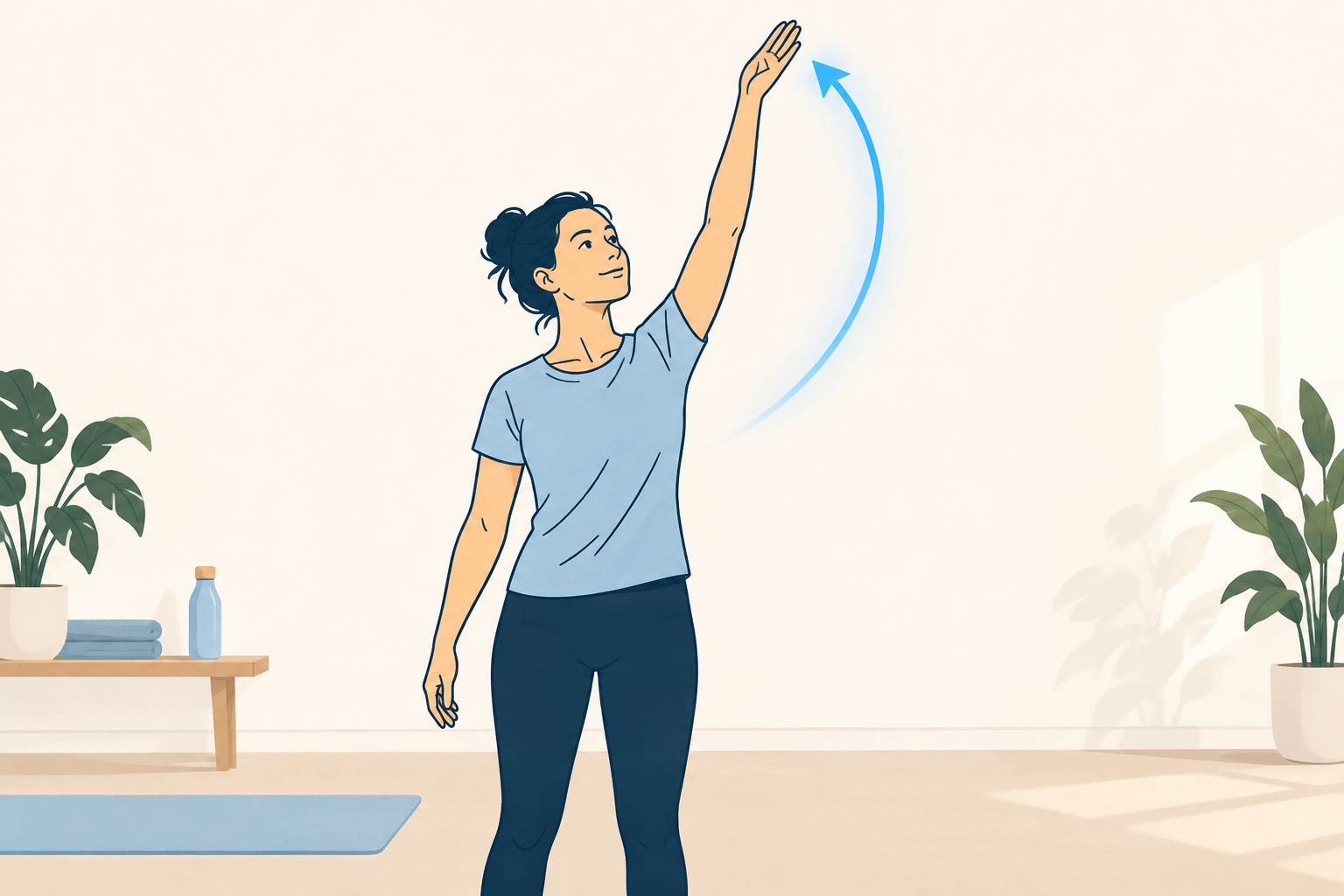
What's going on
PhysioOnClick's shoulder assessments run by video, or as a home visit in the Glasgow area, and the criteria below are exactly what a physiotherapist checks for in either setting. The shoulder trades stability for range of motion, which makes it unusually dependent on the rotator cuff and scapular muscles working well together. Impingement-type pain, rotator cuff tendinopathy and post-dislocation instability all look different on assessment but share a common thread: symptoms often relate more to how load is shared through the shoulder blade and cuff than to any single 'torn' structure.
Pain with overhead reaching, sleeping on the affected side and reduced strength lifting away from the body are the most common complaints. In most non-traumatic presentations, a graded strengthening programme resolves symptoms without surgery, though findings on a scan (partial tears, bursitis) are extremely common in pain-free shoulders too, which is why symptoms — not imaging alone — should drive the treatment plan.
Practical guidance on exercise pacing
The 'boom and bust' cycle — pushing hard on a good day and then needing several days to recover — is one of the most common barriers to steady progress. Pacing means choosing an activity level that's sustainable most days, even on better days, and increasing it gradually on a planned schedule rather than in response to how you feel that morning.
A structured approach sets a baseline slightly below what currently causes a flare-up, holds it consistently for one to two weeks, and only then increases by a small, predictable amount — usually 10–20%. This trades short-term temptation for a more predictable, faster overall recovery.
What physiotherapy assessment looks at
A shoulder assessment checks active and passive range of motion, resisted strength testing for each rotator cuff muscle, scapular positioning and control, and how symptoms change with specific provocation tests, alongside a history of any dislocation, trauma or instability episodes.
Where exercise pacing is the main day-to-day problem, assessment also looks specifically at how that symptom behaves — what makes it better or worse, and how it's changed since it started — since that shapes which part of the rehab plan gets priority first.
A practical starting point
Write down your current baseline for one key activity (minutes walking, reps of an exercise, hours at a desk before a break) and commit to that exact amount for two weeks before increasing it, regardless of how good a particular day feels.
This guide is part of PhysioOnClick's patient education library and is intended to support informed decisions, not replace an individual assessment. If symptoms are worsening, unclear, or affecting your confidence with movement, a full physiotherapy assessment is the safest next step.
When to seek extra help
A shoulder that looks deformed or out of place after a fall, or that cannot be moved at all following trauma, needs A&E to rule out a dislocation or fracture; call 999 if you cannot get there yourself, and do not drive yourself. Shoulder pain with chest pain, chest tightness or breathlessness needs a 999 call, and do not drive yourself. New numbness down the arm with neck pain needs an urgent GP appointment or NHS 111 to check for a cervical nerve root problem before rehab begins.