What's going on
PhysioOnClick's shoulder assessments run by video, or as a home visit in the Glasgow area, and the criteria below are exactly what a physiotherapist checks for in either setting. The shoulder trades stability for range of motion, which makes it unusually dependent on the rotator cuff and scapular muscles working well together. Impingement-type pain, rotator cuff tendinopathy and post-dislocation instability all look different on assessment but share a common thread: symptoms often relate more to how load is shared through the shoulder blade and cuff than to any single 'torn' structure.
Pain with overhead reaching, sleeping on the affected side and reduced strength lifting away from the body are the most common complaints. In most non-traumatic presentations, a graded strengthening programme resolves symptoms without surgery, though findings on a scan (partial tears, bursitis) are extremely common in pain-free shoulders too, which is why symptoms — not imaging alone — should drive the treatment plan.
Practical guidance on shoulder overhead loading
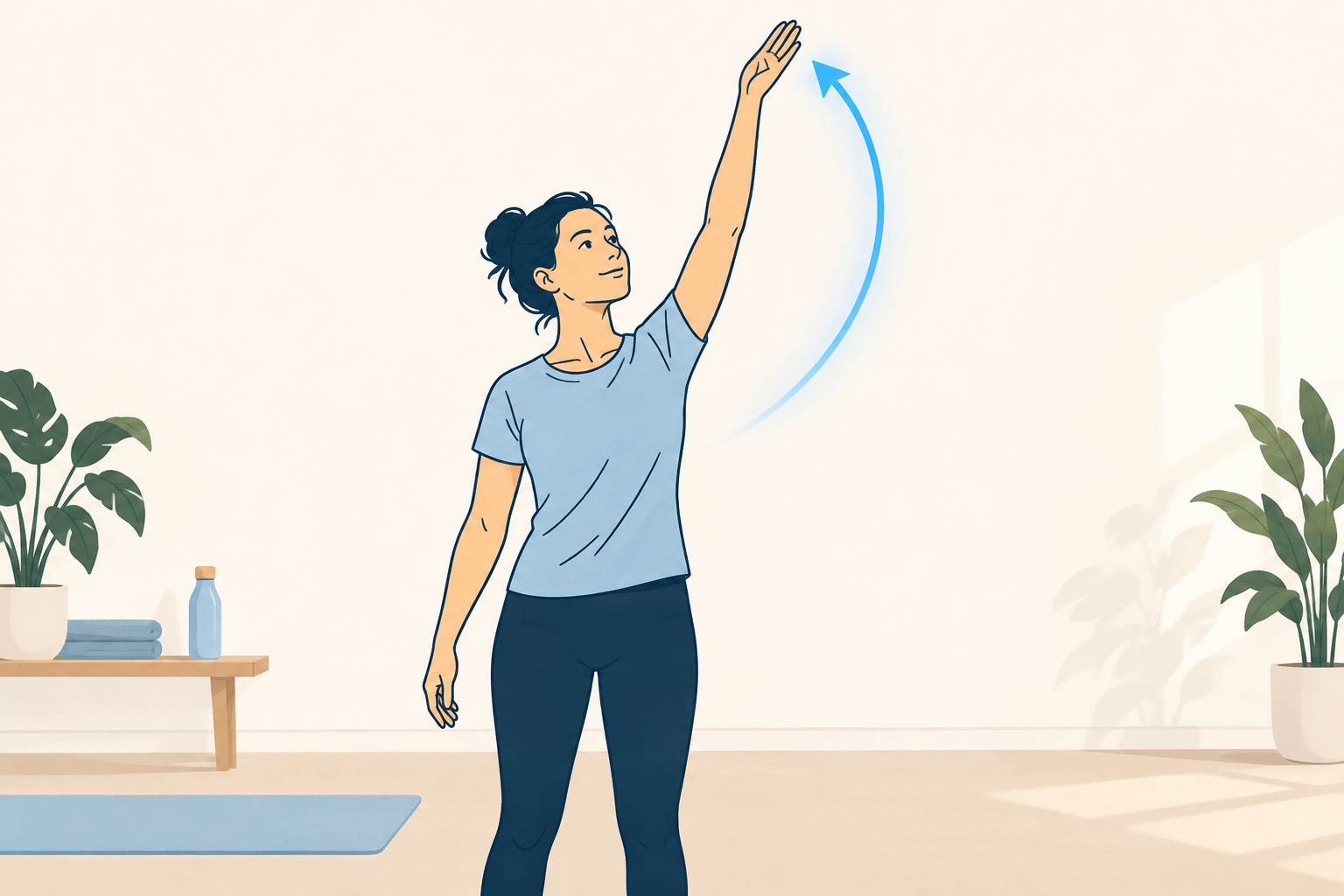
Overhead tasks — reaching to a high shelf, lifting a bag into an overhead locker, an overhead press — put the shoulder into its most demanding position, where the rotator cuff and shoulder blade muscles have the least mechanical advantage. Building tolerance for this position is usually the last stage of shoulder rehab, not the first, and rushing to it is a common cause of setbacks.
A graded approach builds strength through mid-range positions first, then gradually introduces overhead work with lighter loads and fewer repetitions than the eventual goal, tracking how the shoulder responds over the following day before progressing further.
Assessment and when to get extra help
A shoulder assessment checks active and passive range of motion, resisted strength testing for each rotator cuff muscle, scapular positioning and control, and how symptoms change with specific provocation tests, alongside a history of any dislocation, trauma or instability episodes.
A shoulder that looks deformed or out of place after a fall, or that cannot be moved at all following trauma, needs A&E to rule out a dislocation or fracture; call 999 if you cannot get there yourself, and do not drive yourself. Shoulder pain with chest pain, chest tightness or breathlessness needs a 999 call, and do not drive yourself. New numbness down the arm with neck pain needs an urgent GP appointment or NHS 111 to check for a cervical nerve root problem before rehab begins.
A practical starting point
Before attempting full overhead lifting or pressing again, check you can comfortably and painlessly hold a light weight at shoulder height for 20–30 seconds with good control — if that position isn't yet comfortable, overhead loading is premature.
This guide is part of PhysioOnClick's patient education library and is intended to support informed decisions, not replace an individual assessment. If symptoms are worsening, unclear, or affecting your confidence with movement, a full physiotherapy assessment is the safest next step.