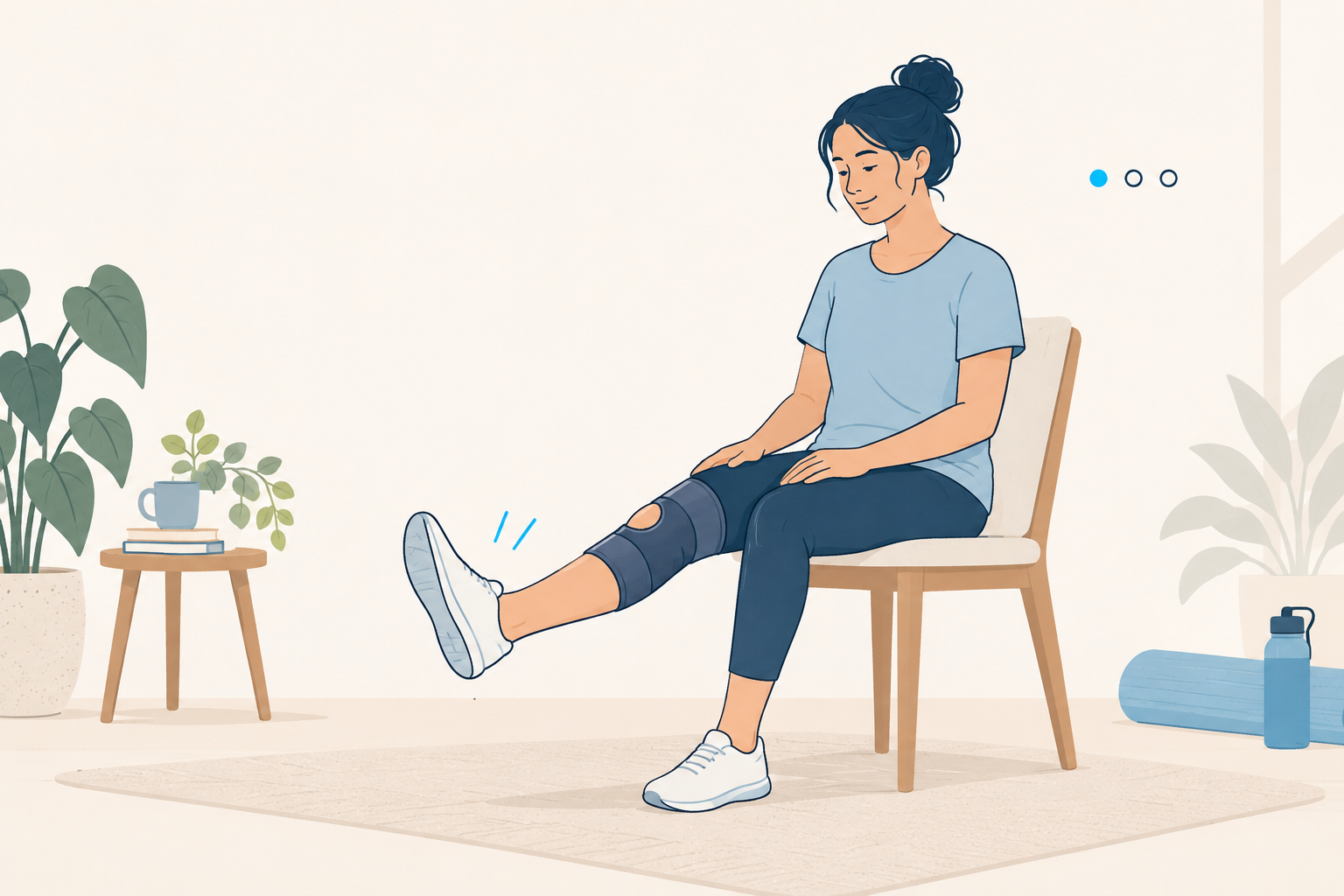
What's going on
PhysioOnClick delivers post-surgery physiotherapy through video consultations, or home visits in the Glasgow area. Rehab starts once your surgical team has confirmed you have no restrictions. Until then, the early stages stay with your surgical team and the physiotherapy they arrange. Recovery after surgery follows a biological healing timeline that rehab has to respect: tissue needs time to gain tensile strength before it can tolerate full loading, regardless of how good someone feels day to day. Rehab that moves faster than this timeline risks setting recovery back; rehab that moves slower than necessary leaves people deconditioned and often more anxious about movement than the surgery itself justifies.
Surgeons' individual protocols vary by procedure, and physiotherapy should follow the specific guidance given for that operation. Within that framework, the physiotherapist's role is to progress range of motion, strength and function as the tissue allows, while addressing the very common drop in confidence that follows any operation.
Practical guidance on balance and falls prevention
Balance relies on the integration of vision, the inner ear's vestibular system, and sensation from the feet and joints (proprioception) — when any one of these is reduced by age, a neurological condition or a leg injury, the others can partly compensate, but often only up to a point that shows up as increased fall risk on uneven ground or in low light.
Balance is trainable at almost any age or level of ability. Structured programmes that progressively challenge stability — reducing base of support, adding movement of the head or arms, changing surfaces — have some of the strongest evidence in physiotherapy for reducing fall risk when done consistently over months, not weeks.
Assessment and when to get extra help
Assessment reviews the surgical procedure and any surgeon-specific precautions, wound healing, swelling, current range of movement against expected milestones for that stage of recovery, and functional goals — return to work, driving, sport or specific hobbies.
Increasing redness, warmth, discharge or fever around a surgical site, or a sudden increase in swelling or pain need an urgent GP appointment or NHS 111 rather than physiotherapy. Throbbing or cramping pain or swelling in one leg can be a blood clot and needs an urgent GP appointment or NHS 111; with breathlessness or chest pain, call 999 or go to A&E (possible clot in the lung), and do not drive yourself.
A practical starting point
Practise standing on one leg near a stable surface (worktop or wall) for up to 30 seconds each side, once or twice a day, progressing to eyes closed or a softer surface only once the easier version feels solid and controlled.
This guide is part of PhysioOnClick's patient education library and is intended to support informed decisions, not replace an individual assessment. If symptoms are worsening, unclear, or affecting your confidence with movement, a full physiotherapy assessment is the safest next step.