What's going on
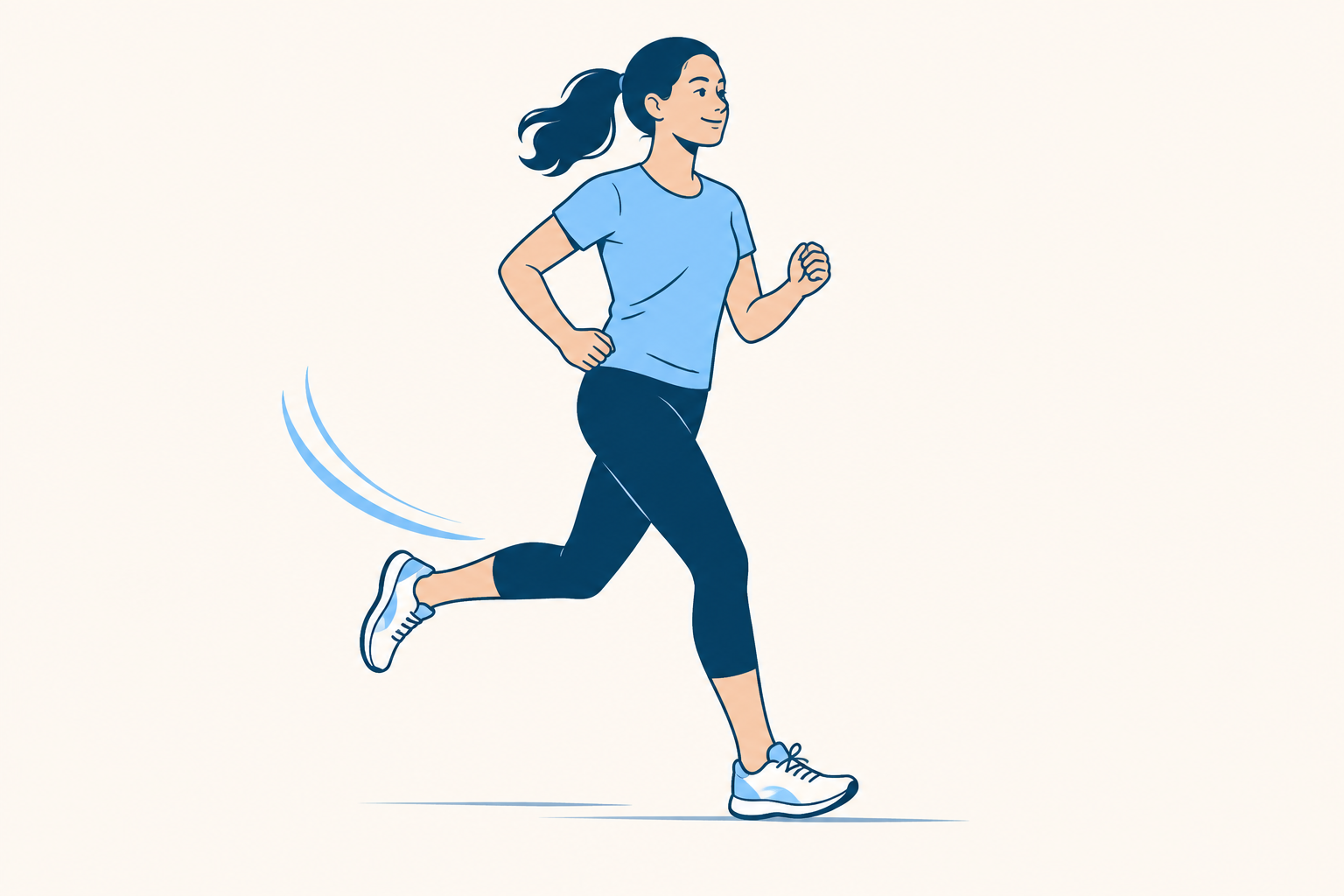
Sports injury assessments at PhysioOnClick happen by video, or as a home visit in the Glasgow area, and the same clinical reasoning below applies whether the injury happened on a pitch or a running route. Sports injuries split broadly into acute trauma (a specific incident — a sprain, strain or tear with a clear mechanism) and overuse injuries that build gradually when training load rises faster than the tissue's ability to adapt. The rehab principles differ: acute injuries usually need an initial period of protected loading followed by progressive rebuilding, while overuse injuries need a training-load review as much as they need treatment.
The single biggest predictor of re-injury on return to sport isn't how the injury was treated in isolation — it's whether the athlete returns with adequate strength, control and confidence relative to the demands of their sport, tested under fatigue and at speed, not just pain-free at rest.
Practical guidance on exercise pacing
The 'boom and bust' cycle — pushing hard on a good day and then needing several days to recover — is one of the most common barriers to steady progress. Pacing means choosing an activity level that's sustainable most days, even on better days, and increasing it gradually on a planned schedule rather than in response to how you feel that morning.
A structured approach sets a baseline slightly below what currently causes a flare-up, holds it consistently for one to two weeks, and only then increases by a small, predictable amount — usually 10–20%. This trades short-term temptation for a more predictable, faster overall recovery.
Assessment and when to get extra help
Assessment covers the mechanism and history of injury, strength and range of movement compared side-to-side, movement quality under load (jumping, cutting, sprinting mechanics where relevant), and a realistic picture of training volume and competition demands to build a return-to-sport timeline around.
A visibly deformed joint or a bone out of place after an injury, or numbness, tingling or weakness below the injury site, needs A&E; call 999 if you cannot get there yourself, and do not drive yourself. Inability to bear any weight after a lower-limb injury, or a loud pop with immediate significant swelling, warrants same-day medical assessment (NHS 111 or an urgent treatment centre) before any rehab plan is started.
A practical starting point
Write down your current baseline for one key activity (minutes walking, reps of an exercise, hours at a desk before a break) and commit to that exact amount for two weeks before increasing it, regardless of how good a particular day feels.
This guide is part of PhysioOnClick's patient education library and is intended to support informed decisions, not replace an individual assessment. If symptoms are worsening, unclear, or affecting your confidence with movement, a full physiotherapy assessment is the safest next step.