What's going on
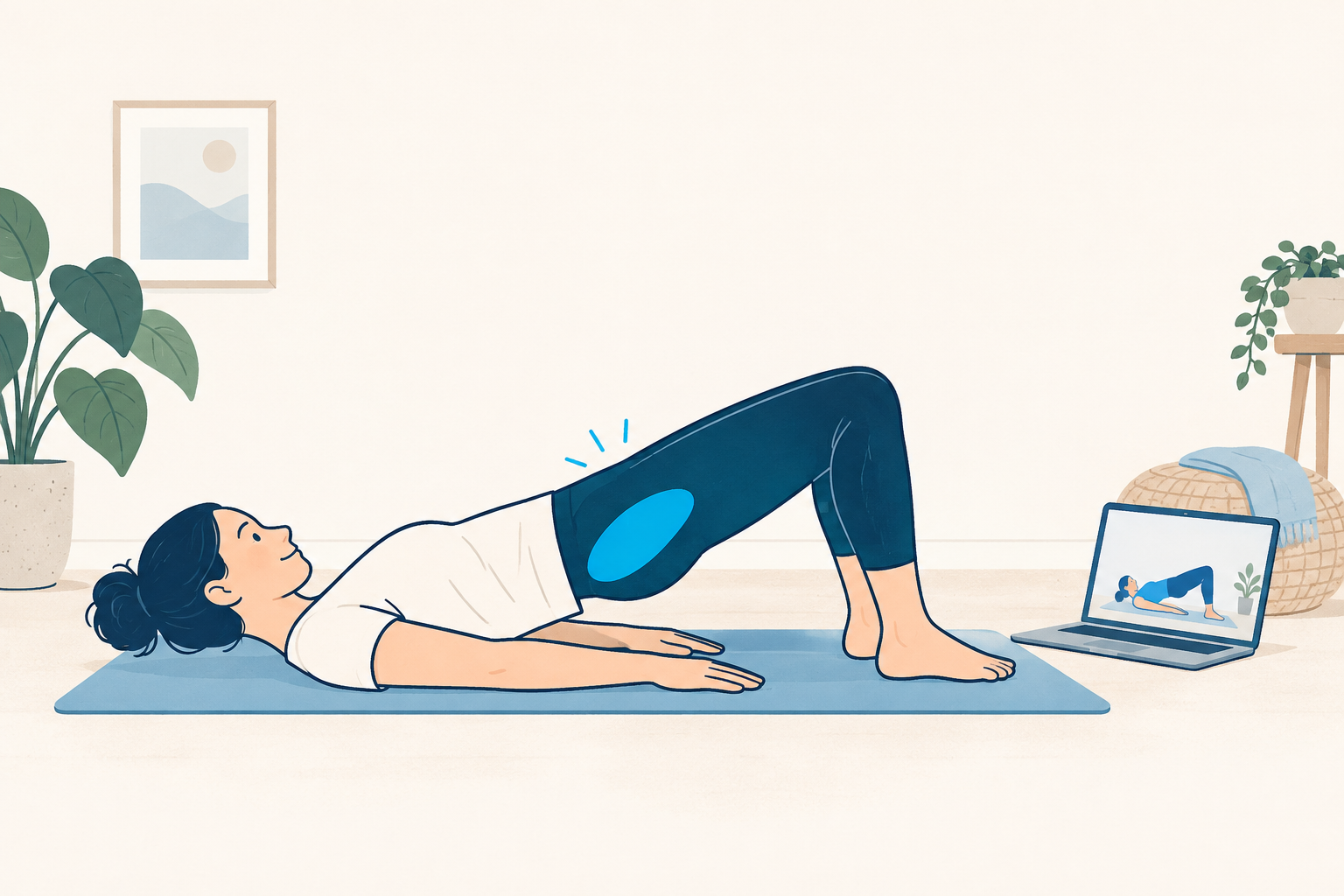
PhysioOnClick builds every home exercise programme around video consultations, so a physiotherapist can watch technique and adjust the plan remotely rather than relying on a printed sheet alone. The exercises that work best are rarely the most complicated ones — they're the ones a person can actually do consistently. Home exercise programmes fail more often from poor adherence and unclear dosage than from choosing the 'wrong' exercise, which is why physiotherapy puts as much emphasis on habit-building and progression rules as on the movements themselves.
A well-designed home programme specifies not just which exercises, but how much (sets, reps, load), how often, and clear criteria for when to progress, hold, or scale back — removing the guesswork that causes people to either under-do it or overdo it on a good day.
Practical guidance on exercise pacing
The 'boom and bust' cycle — pushing hard on a good day and then needing several days to recover — is one of the most common barriers to steady progress. Pacing means choosing an activity level that's sustainable most days, even on better days, and increasing it gradually on a planned schedule rather than in response to how you feel that morning.
A structured approach sets a baseline slightly below what currently causes a flare-up, holds it consistently for one to two weeks, and only then increases by a small, predictable amount — usually 10–20%. This trades short-term temptation for a more predictable, faster overall recovery.
What physiotherapy assessment looks at
Before prescribing a home programme, a physiotherapist checks baseline strength and movement quality, current activity levels, equipment and space available at home, and any specific goals so the plan is realistic rather than generic.
Where exercise pacing is the main day-to-day problem, assessment also looks specifically at how that symptom behaves — what makes it better or worse, and how it's changed since it started — since that shapes which part of the rehab plan gets priority first.
A practical starting point
Write down your current baseline for one key activity (minutes walking, reps of an exercise, hours at a desk before a break) and commit to that exact amount for two weeks before increasing it, regardless of how good a particular day feels.
This guide is part of PhysioOnClick's patient education library and is intended to support informed decisions, not replace an individual assessment. If symptoms are worsening, unclear, or affecting your confidence with movement, a full physiotherapy assessment is the safest next step.
When to seek extra help
Sharp new pain during an exercise that doesn't ease with rest, exercises that consistently worsen symptoms the following day, or new neurological symptoms (numbness, weakness) starting during a home programme should prompt a pause and a physiotherapy review, not pushing through. Sudden weakness or numbness down one side of the body, a drooping face or trouble speaking is different: call 999 (possible stroke), and do not drive yourself.