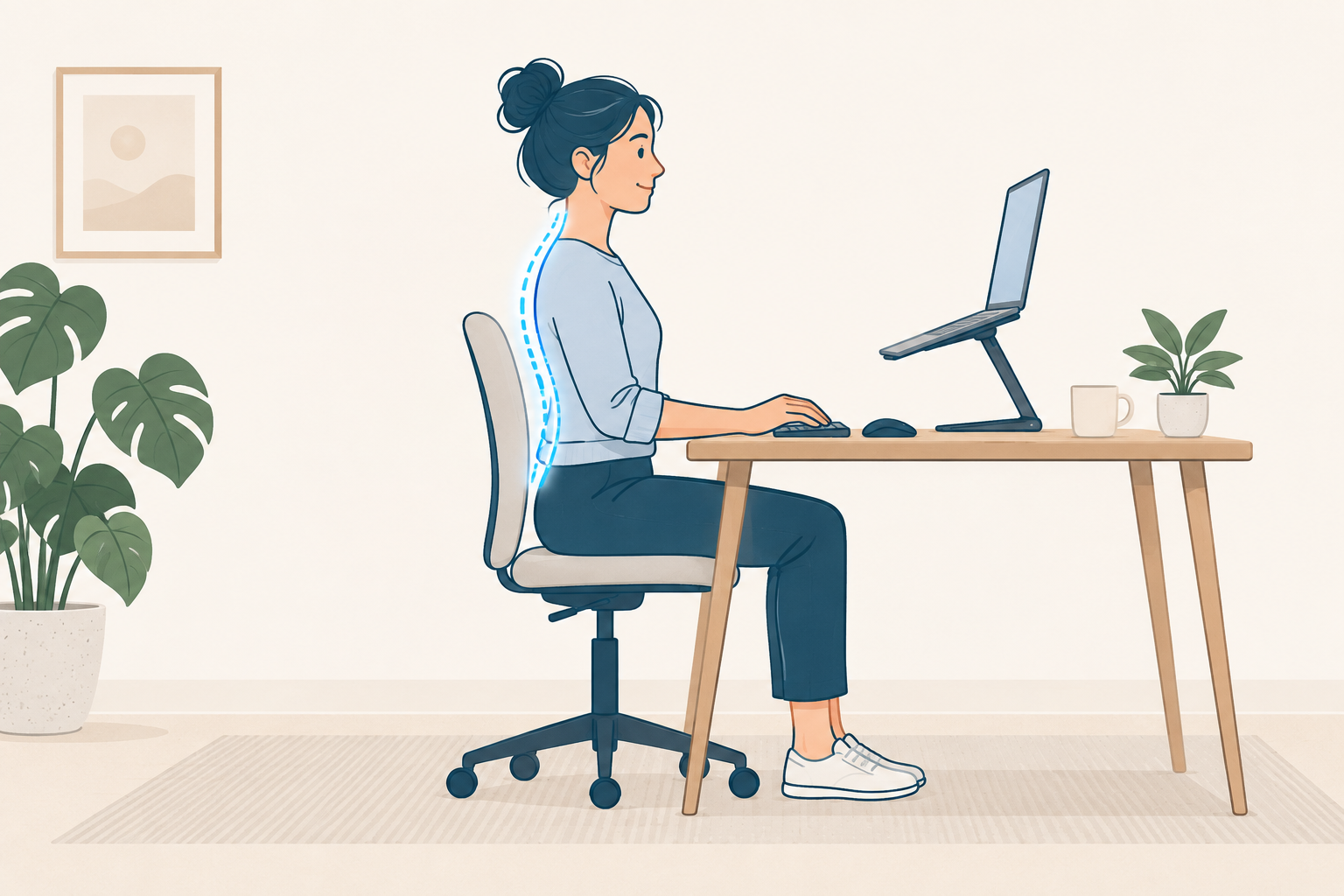
What's going on
PhysioOnClick reviews workplace-related pain — including home workstations — through online video consultations, which makes it straightforward to see an actual desk setup rather than working from a description alone. Workplace-related pain is rarely caused by posture alone — it's usually a combination of sustained static positions, insufficient movement variety through the day, and a workstation setup that puts joints toward the end of their comfortable range for hours at a time. Fixing the chair height helps, but rarely resolves symptoms on its own if the underlying issue is hours of unbroken sitting or screen-focused strain.
The evidence on ergonomic interventions is clearest when equipment changes are combined with movement breaks and some general conditioning work — the body copes far better with a poor position held briefly than a good position held for six hours straight.
Practical guidance on desk-based pain flare-ups
Pain that consistently builds through a working day and eases over an evening or weekend points toward a load and position problem rather than ongoing tissue damage — the tissue is being irritated by sustained posture, not re-injured each day. The fix usually isn't a single perfect chair, but breaking up long static periods with brief, regular movement.
A practical pattern that works for most people is a short movement break every thirty to forty-five minutes — standing, walking to get water, or a few shoulder blade squeezes — rather than waiting for pain to build before moving. Calendar reminders work better than relying on remembering.
Assessment and when to get extra help
A workplace-focused assessment looks at desk and screen setup, chair support, keyboard and mouse position, how the working day is structured (meeting length, break frequency), and any specific symptoms that correlate with particular tasks or times of day.
Numbness or tingling in the hands that doesn't resolve between work sessions, progressively worsening neck or arm symptoms despite ergonomic changes, or pain that wakes you at night should be assessed by a physiotherapist or GP rather than managed with further equipment changes alone.
A practical starting point
Set a recurring reminder every 30–40 minutes through your working day for a 60-second movement break, and reassess your chair height, screen height and keyboard distance against basic ergonomic guidance rather than assuming the furniture is fine.
This guide is part of PhysioOnClick's patient education library and is intended to support informed decisions, not replace an individual assessment. If symptoms are worsening, unclear, or affecting your confidence with movement, a full physiotherapy assessment is the safest next step.