What's going on
PhysioOnClick supports neurological conditions through video consultations, or home visits in the Glasgow area, as a separate private service that does not replace a patient's NHS or specialist team. Before you start, your GP or specialist team must confirm it is safe for you to begin physiotherapy. Neurological physiotherapy — for conditions such as stroke, Parkinson's, multiple sclerosis or peripheral nerve injury — works differently to musculoskeletal rehab because the goal is often to support the nervous system's capacity to adapt (neuroplasticity) and manage a changing condition, rather than to heal a single injured tissue on a predictable timeline.
Symptoms like weakness, altered sensation, balance difficulty or fatigue often fluctuate day to day and can be affected by heat, illness, stress or overexertion in ways that differ from typical musculoskeletal pain, so pacing and monitoring matter as much as the exercises themselves.
Practical guidance on balance and falls prevention
Balance relies on the integration of vision, the inner ear's vestibular system, and sensation from the feet and joints (proprioception) — when any one of these is reduced by age, a neurological condition or a leg injury, the others can partly compensate, but often only up to a point that shows up as increased fall risk on uneven ground or in low light.
Balance is trainable at almost any age or level of ability. Structured programmes that progressively challenge stability — reducing base of support, adding movement of the head or arms, changing surfaces — have some of the strongest evidence in physiotherapy for reducing fall risk when done consistently over months, not weeks.
Assessment and when to get extra help
Assessment typically includes standardised balance and mobility measures, muscle tone and strength testing, functional tasks relevant to daily life (transfers, stairs, walking distance), and confirmation that the GP or specialist team managing the underlying neurological condition has said it is safe to begin physiotherapy.
Sudden new weakness, facial drooping, slurred speech, a sudden severe headache, or a rapid, unexplained change in an existing neurological condition are medical emergencies (possible stroke): call 999 rather than booking a physiotherapy appointment, and do not drive yourself.
A practical starting point
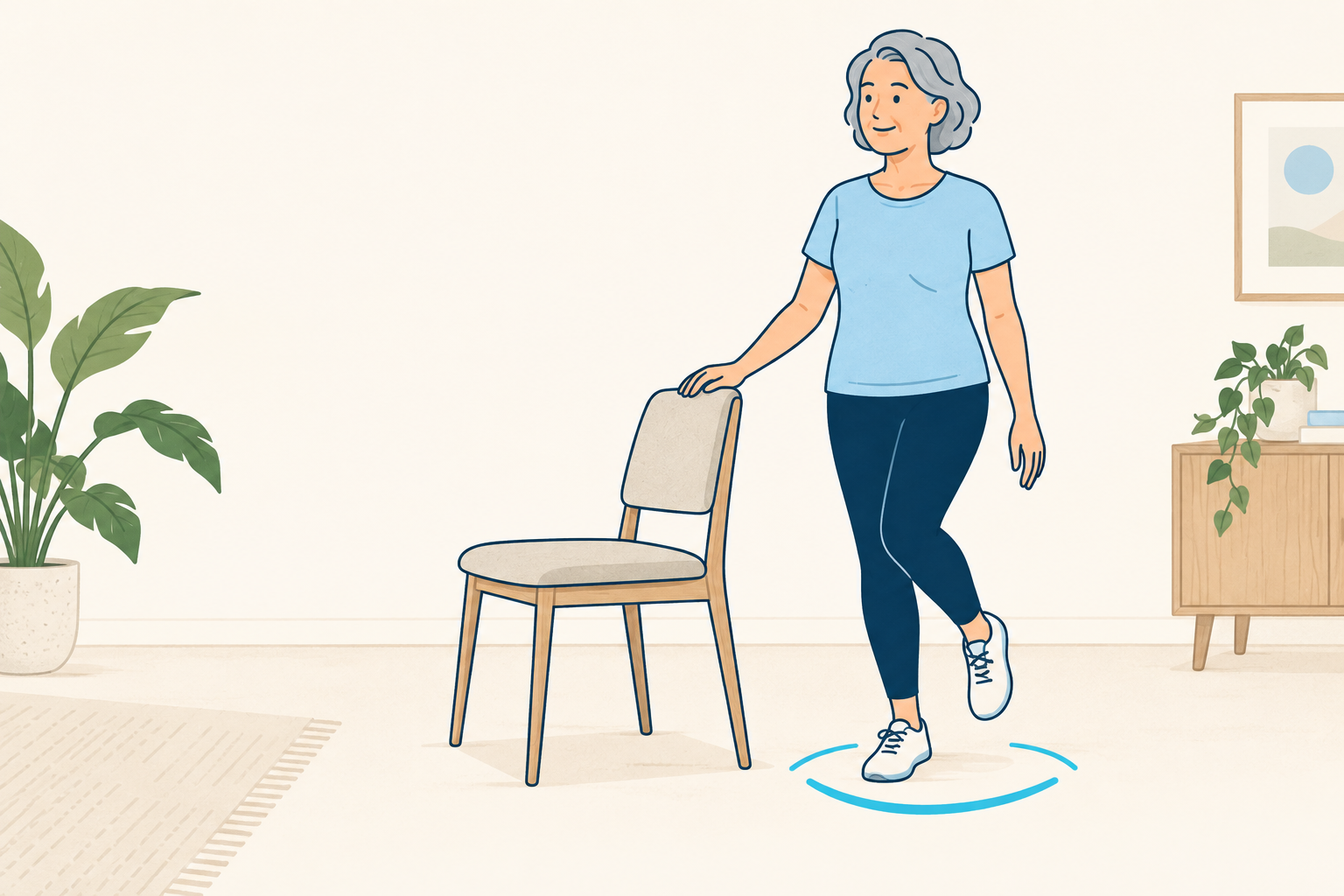
Practise standing on one leg near a stable surface (worktop or wall) for up to 30 seconds each side, once or twice a day, progressing to eyes closed or a softer surface only once the easier version feels solid and controlled.
This guide is part of PhysioOnClick's patient education library and is intended to support informed decisions, not replace an individual assessment. If symptoms are worsening, unclear, or affecting your confidence with movement, a full physiotherapy assessment is the safest next step.